
Our research program is based on a combination of organic chemistry, biochemistry, and
biophysics directed towards understanding the various roles small molecules play in redox
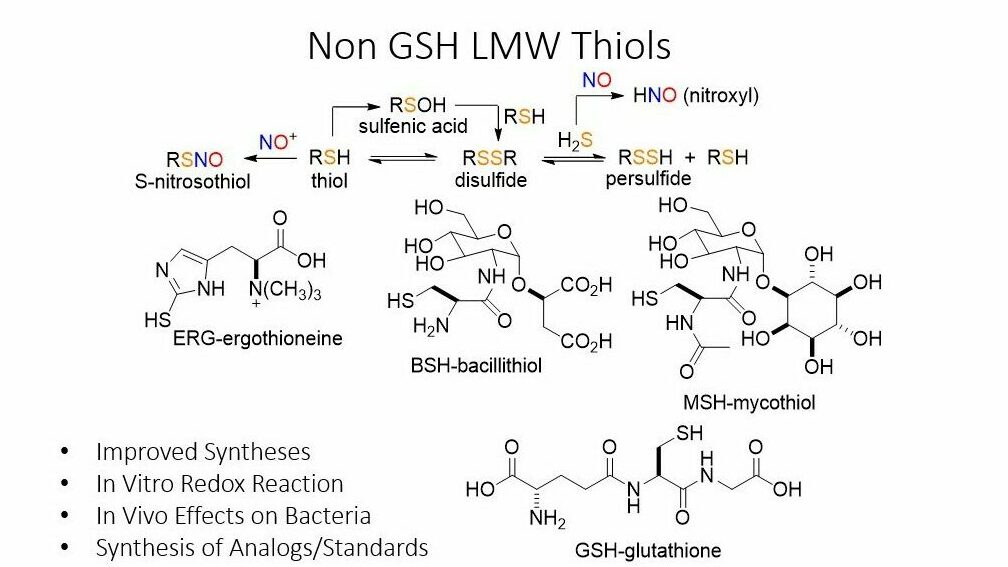
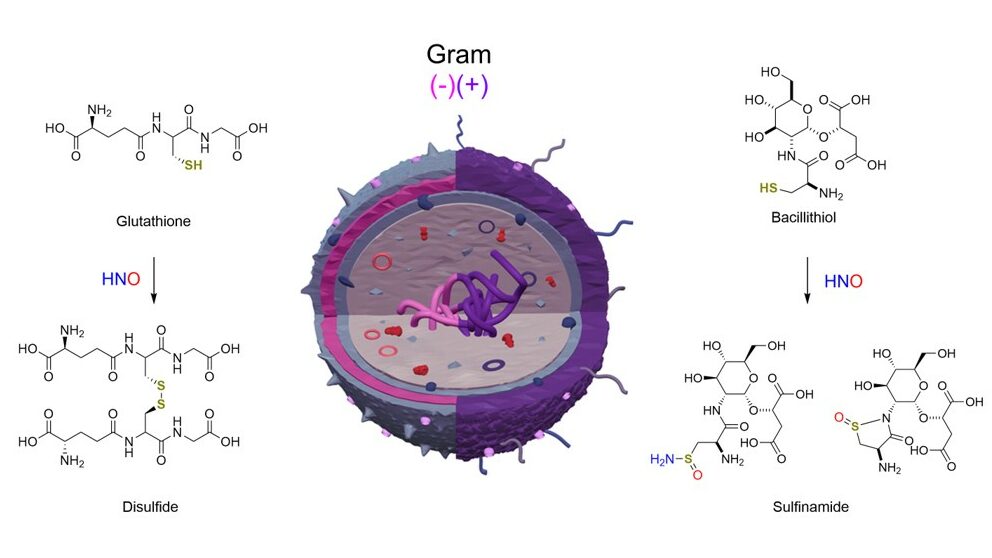
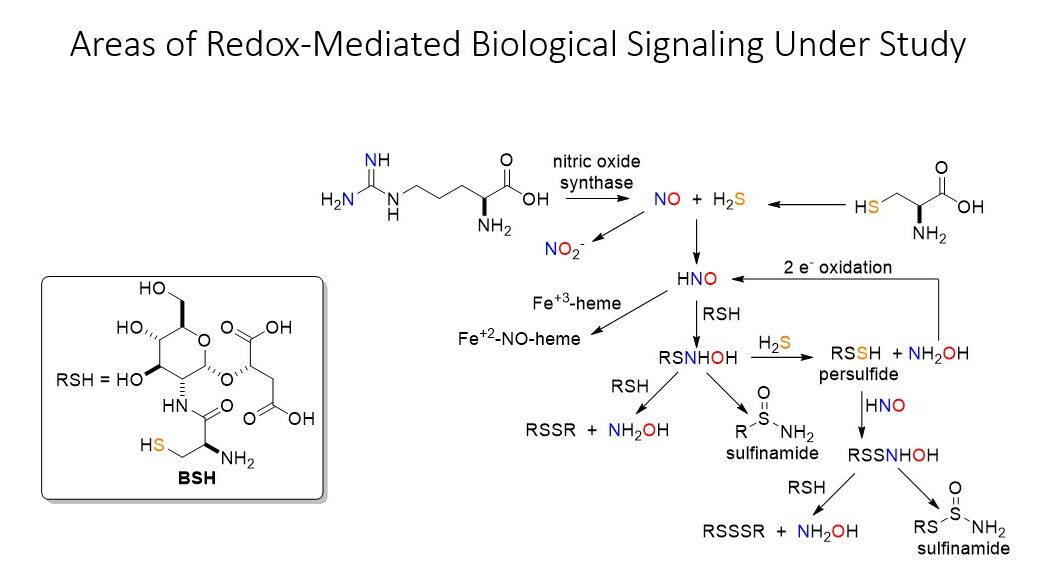
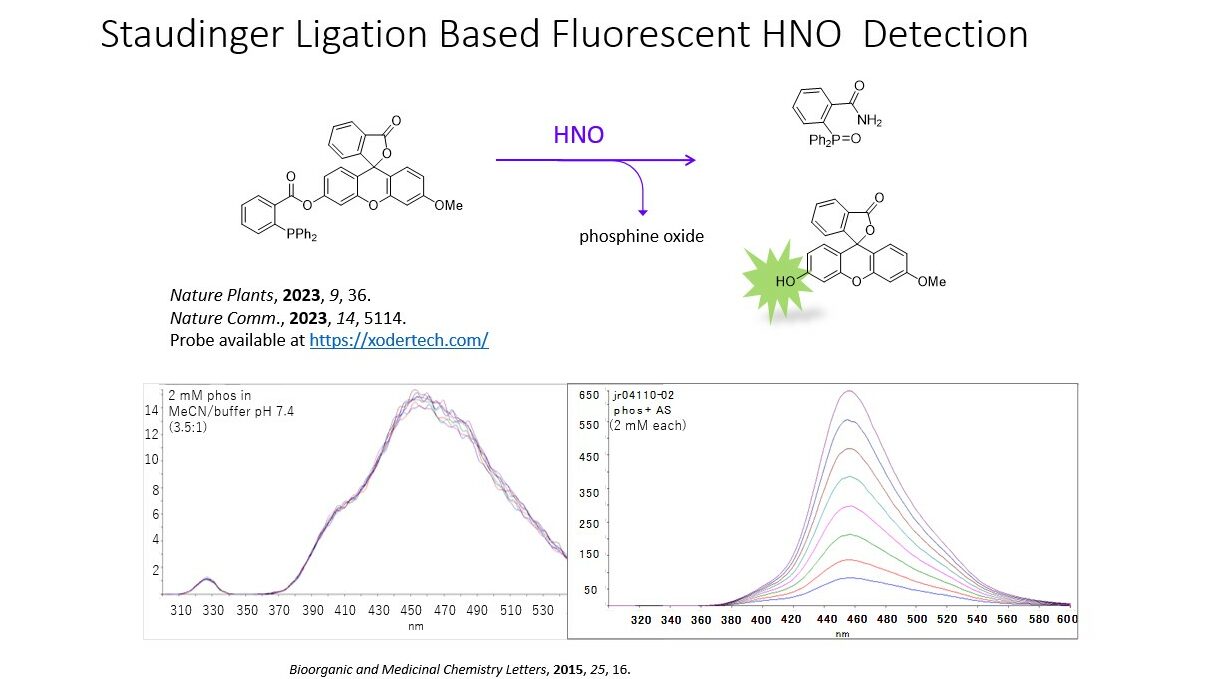
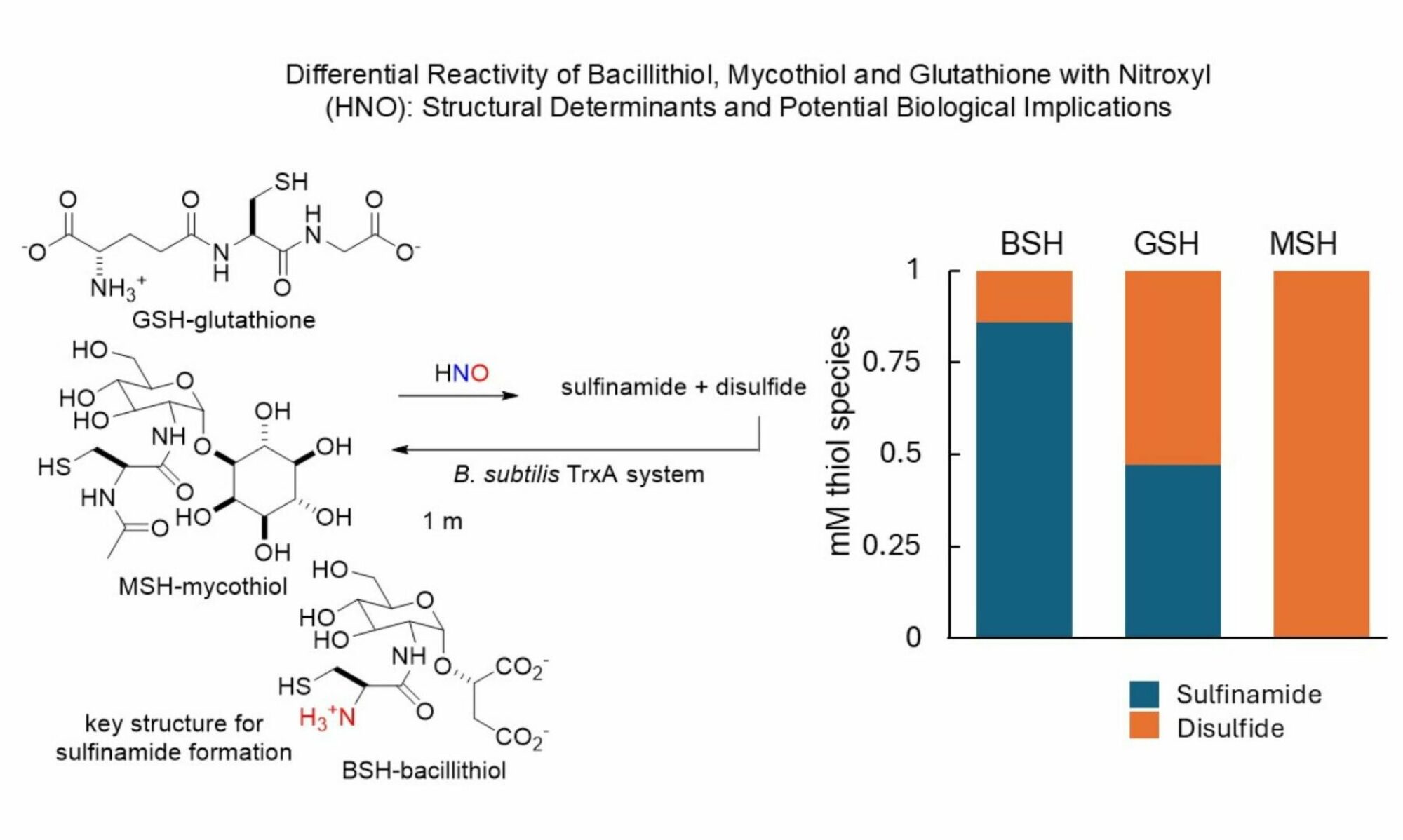
biochemistry. We are especially interested in how nitric oxide (NO), hydrogen sulfide (H2S) and hydrogen peroxide (H2O2), and nitroxyl (HNO) affect bacteria that produce structurally unique low molecular weight (LMW) thiols. Nitroxyl and hydrogen sulfide regulate sulfur metabolism in bacteria and our current interests focus on the investigation of reactivity of nitroxyl with the unique low molecular weight thiols found in some bacteria. We currently study the in vitro reactions of nitroxyl with bacillithiol and mycothiol to determine the reaction kinetics and products. The effect of nitroxyl on the bacteria producing these thiols will be related to the in vitro chemistry and the observed phenotype. We hope that understanding this basic chemistry and biology will lead to new approaches for anti-biotic development. We continue to further refine our methods of HNO detection and have initiated a project to explore new biological pathways of carbon monoxide (CO) production.
Specifically, our laboratory examines:
- The in vitro chemistry of small molecule oxidants, like HNO, with bacillithiol and mycothiol by determining final products and the kinetics of the reaction
- The effects of HNO on bacteria that produce bacillithiol and mycothiol
- Synthetically generating authentic standards and new potential antibiotics
Many of these projects are completed in collaboration with other groups in chemistry, physics and the medical school as well as other institutions. Students in our group are exposed to organic synthesis, biochemistry, molecular biology, biophysics (especially spectroscopy) and bio-analytical chemistry.